
BaseMobilisedPipeline#
- class mobgap.pipeline.base.BaseMobilisedPipeline[source]#
Base typing interface for Mobilised Pipelines.
This only defines the main attributes and methods, we expect the pipeline to have. For the actual implementation of the pipeline, see
GenericMobilisedPipeline.- Attributes:
- %(primary_results)s
- %(perf_)s
See also
mobgap.pipeline.GenericMobilisedPipelineThe generic pipeline without predefined algorithms.
mobgap.pipeline.MobilisedPipelineHealthyA predefined pipeline for healthy/mildly impaired walking.
mobgap.pipeline.MobilisedPipelineImpairedA predefined pipeline for impaired walking.
Methods
clone()Create a new instance of the class with all parameters copied over.
get_params([deep])Get parameters for this algorithm.
Get the recommended cohorts for this pipeline.
run(datapoint)Run the pipeline.
safe_run(datapoint)Run the pipeline with some additional checks.
set_params(**params)Set the parameters of this Algorithm.
- __init__(*args, **kwargs)#
- clone() Self#
Create a new instance of the class with all parameters copied over.
This will create a new instance of the class itself and all nested objects
- get_params(deep: bool = True) dict[str, Any]#
Get parameters for this algorithm.
- Parameters:
- deep
Only relevant if object contains nested algorithm objects. If this is the case and deep is True, the params of these nested objects are included in the output using a prefix like
nested_object_name__(Note the two “_” at the end)
- Returns:
- params
Parameter names mapped to their values.
- get_recommended_cohorts() tuple[str, ...] | None[source]#
Get the recommended cohorts for this pipeline.
- Returns:
- recommended_cohorts
The recommended cohorts for this pipeline or None
- run(datapoint: DatasetT) Self#
Run the pipeline.
Note
It is usually preferred to use
safe_runon custom pipelines instead ofrun, assafe_runcan catch certain implementation errors of the run method.- Parameters:
- datapoint
An instance of a
tpcp.Datasetcontaining only a single datapoint. The structure of the data will depend on the dataset.
- Returns:
- self
The class instance with all result attributes populated
- safe_run(
- datapoint: DatasetT,
Run the pipeline with some additional checks.
It is preferred to use this method over
run, as it can catch some simple implementation errors of custom pipelines.The following things are checked:
The run method must return
self(or at least an instance of the pipeline)The run method must set result attributes on the pipeline
All result attributes must have a trailing
_in their nameThe run method must not modify the input parameters of the pipeline
- Parameters:
- datapoint
An instance of a
tpcp.Datasetcontaining only a single datapoint. The structure of the data will depend on the dataset.
- Returns:
- self
The class instance with all result attributes populated
Examples using mobgap.pipeline.base.BaseMobilisedPipeline#




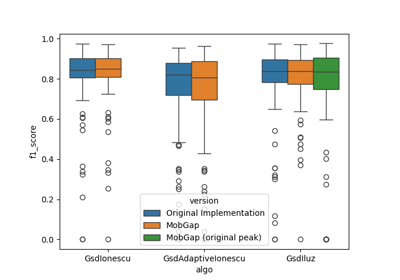
Performance of the gait sequences algorithm on the TVS dataset
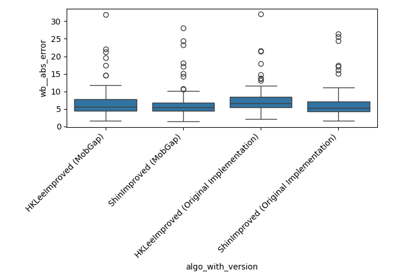
Performance of the cadence algorithms on the TVS dataset