
LrcEmulationPipeline#
- class mobgap.laterality.pipeline.LrcEmulationPipeline(algo: BaseLRClassifier)[source]#
Run a LRC algorithm in isolation, using reference ICs as input.
This pipeline can wrap any LR-classifier and run it on a datapoint of any valid dataset or optimize it across a full dataset. The LRC is called once per WB in the datapoint and the reference initial contacts are used as the
ic_listinput for the algorithm.This pipeline should be used when performing a “block-wise” evaluation of an LRC algorithm or when optimizing an LRC either using external (
tpcp.optimize) or internal (self_optimize) optimization.- Parameters:
- algo
The LRC algorithm to be run in the pipeline.
- Other Parameters:
- datapoint
The datapoint that was passed to the run method.
- Attributes:
- ic_lr_list_
A dataframe containing all ICs across all WBs of a datapoint with an additional column
lr_labelspecifying the detected left/right label.- per_wb_algo_
A dict of the LRC algorithm instances run on each WB of the datapoint. The key is the wb-id. Each instance contains the reference to the data it was called with, the classified labels and potential additional debug information provided by the individual algorithm.
Methods
clone()Create a new instance of the class with all parameters copied over.
get_params([deep])Get parameters for this algorithm.
run(datapoint)Run the pipeline on a single datapoint.
safe_run(datapoint)Run the pipeline with some additional checks.
self_optimize(dataset, **kwargs)Run a "self-optimization" of an LRD-algorithm (if it implements the respective method).
self_optimize_with_info(dataset, **kwargs)Optimize the input parameters of the pipeline or algorithm using any logic.
set_params(**params)Set the parameters of this Algorithm.
- __init__(algo: BaseLRClassifier) None[source]#
- clone() Self#
Create a new instance of the class with all parameters copied over.
This will create a new instance of the class itself and all nested objects
- get_params(deep: bool = True) dict[str, Any]#
Get parameters for this algorithm.
- Parameters:
- deep
Only relevant if object contains nested algorithm objects. If this is the case and deep is True, the params of these nested objects are included in the output using a prefix like
nested_object_name__(Note the two “_” at the end)
- Returns:
- params
Parameter names mapped to their values.
- run(
- datapoint: BaseGaitDatasetWithReference,
Run the pipeline on a single datapoint.
This extracts the imu data (
data_ss) and the reference initial contact per reference WB within the datapoint and then calls thedetectmethod of the algorithm once per WB.- Parameters:
- datapoint
A single datapoint of a Gait Dataset with reference information.
- Returns:
- self
The pipeline instance with the detected gait sequences stored in the
gs_list_attribute.
- safe_run(
- datapoint: DatasetT,
Run the pipeline with some additional checks.
It is preferred to use this method over
run, as it can catch some simple implementation errors of custom pipelines.The following things are checked:
The run method must return
self(or at least an instance of the pipeline)The run method must set result attributes on the pipeline
All result attributes must have a trailing
_in their nameThe run method must not modify the input parameters of the pipeline
- Parameters:
- datapoint
An instance of a
tpcp.Datasetcontaining only a single datapoint. The structure of the data will depend on the dataset.
- Returns:
- self
The class instance with all result attributes populated
- self_optimize(
- dataset: BaseGaitDatasetWithReference,
- **kwargs: Unpack[dict[str, Any]],
Run a “self-optimization” of an LRD-algorithm (if it implements the respective method).
This method extracts the data_list, ic_list, and left-right label from each wb in each datapoint in the dataset, and then calls the
self_optimizemethod of the algorithm with these lists.Note, that this is only useful for algorithms with “internal” optimization logic (i.e. ML-based algorithms). If you want to optimize the hyperparameters of the algorithm, you should use the
tpcp.optimizemodule.- Parameters:
- dataset
A Gait Dataset with reference information.
- kwargs
Additional parameters required for the optimization process. This will be passed to the
self_optimizemethod of the GSD algorithm.
- Returns:
- self
The pipeline instance with the optimized LRD algorithm.
- self_optimize_with_info(
- dataset: DatasetT,
- **kwargs,
Optimize the input parameters of the pipeline or algorithm using any logic.
This is equivalent to
self_optimize, but allows you to return additional information as a second return value. If you implement this method, there is no need to implementself_optimizeas well.- Parameters:
- dataset
An instance of a
tpcp.Datasetcontaining one or multiple data points that can be used for training. The structure of the data and the available reference information will depend on the dataset.- kwargs
Additional parameters required for the optimization process.
- Returns:
- self
The class instance with optimized input parameters.
- info
An arbitrary piece of information
Examples using mobgap.laterality.pipeline.LrcEmulationPipeline#
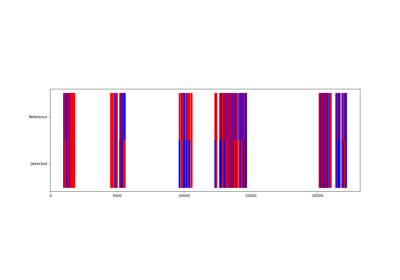

Revalidation of the laterality classification algorithms